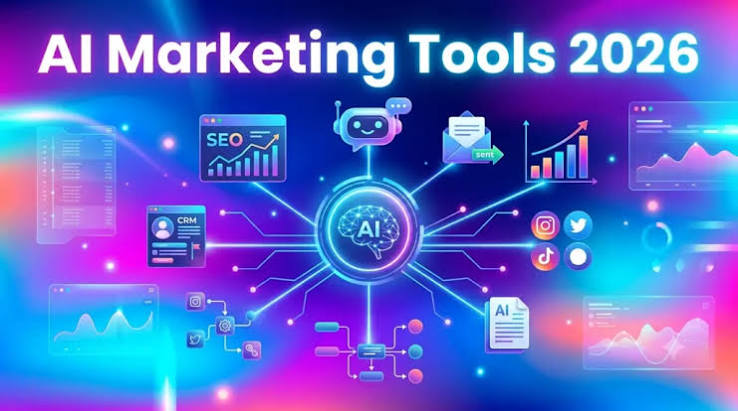
The AI Digital Marketing Tools are to be considered while running a small business in Singapore. Business means wearing a dozen hats at once and marketing is usually the one that gets pushed to the bottom of the list.Fret not, the good news is that AI tools have made it possible to do more with less time, less budget, and a much smaller team. You don’t need an in-house marketing department anymore to compete online. You just need the right tools, used the right way, worth trying, along with what they’re actually good for and where they fall short.
https://pavaniscinde.comBest AI Digital Marketing Freelancer in Singapore!
The five AI Digital Marketing tools
1. ChatGPT / Claude
For Content Drafting and Brainstorming: If you’re not already using an AI writing assistant, this is the easiest place to start. Tools like ChatGPT and Claude can help draft blog posts, social captions, email copy, and even ad headlines in minutes instead of hours.
Best for: Getting past the blank page, generating content ideas, drafting first versions of copy.
Where it falls short: AI-generated content often sounds generic if used as-is. It works best as a starting point that something you edit, add real examples to, and shape into your own brand voice, rather than a finished product you publish directly.
Practical tip: Use it to draft, then rewrite the first and last paragraphs yourself. That’s usually enough to make the content feel human and specific to your business.
2. Canva’s AI Tools
For Fast, On-Brand Visuals, Canva has quietly become one of the most useful AI Digital Marketing tools for small businesses, especially with features like Magic Design and background removal. You can generate social media graphics, ad creatives, and even short video content without hiring a designer for every single post.
Best for: Social media content, quick promotional graphics, maintaining consistent branding without a design team.
Where it falls short: For more polished, high-stakes brand assets (like a logo), you’ll still want a professional designer’s input.
Practical tip: Build a branded template once, then let Canva’s AI tools handle the available variations, this keeps your content consistent without starting from scratch every time. About
3. Google Analytics 4 with AI Insights
For Understanding What’s Actually Working, a lot of small businesses set up Google Analytics once and never look at it again. GA4’s AI-driven insights make this far more approachable as it automatically flags unusual trends, like a sudden traffic spike or a drop in conversions, without you needing to dig through spreadsheets.
Best for: Understanding which pages, campaigns, or traffic sources are actually driving results.
Where it falls short: GA4 has a steeper learning curve than its predecessor, and its automated insights are useful but still need human interpretation to turn into action.
Practical tip: Set up custom alerts for key events , like form submissions or purchases Andy doing this you so are not relying on manually checking dashboards.
Website: https://digitalscholar.in
4. Meta Advantage+
For Smarter, Lower-Effort Ad Campaigns, If you’re running Facebook or Instagram ads, Meta’s Advantage+ campaigns use AI Digital Marketing Tools to automatically test creative variations, adjust targeting, and optimize budget allocation in real time. This used to require constant manual A/B testing, now the platform does much of that heavy lifting.
Best for: Businesses with limited time to manage ads manually, or those just starting with paid social.
Where it falls short: Advantage+ campaigns need a reasonable budget and some data history to perform well and they’re less effective for very small, one-off ad spends.
Practical tip: Feed the system multiple creative variations (images, headlines) upfront, the AI performs best when it has options to test against each other.
5. Semrush or Ubersuggest with AI Features
For SEO That Doesn’t Require Guesswork, SEO used to mean hours of manual keyword research. Tools like Semrush now use AI to suggest content topics, identify keyword gaps against competitors, and even flag technical SEO issues on your website automatically.
Best for: Figuring out what your customers are actually searching for, and where your website is losing potential traffic.
Where it falls short: These tools give you data and suggestions and they don’t write or fix anything for you. You (or someone managing your SEO) still need to act on the insights.
Practical tip: Start with the “keyword gap” feature to see what competitors are ranking for that you’re not, it’s often the fastest way to find realistic content opportunities.
The Common Thread: AI Digital Marketing Tools Speeds Things Up, But Doesn’t Replace Strategy
Every tool on this list does one thing really well: it removes the slow, manual parts of marketing so you can focus on the decisions that actually matter like what to say, who to say it to, and how to build a brand people trust. None of them work well in isolation, and none of them replace a clear strategy behind the scenes.
That’s usually where small businesses get stuck. It’s not that the tools are hard to use — it’s that using five different AI tools without a coordinated plan can create more noise than results. A scattered mix of AI-generated posts, untested ad campaigns, and unreviewed analytics dashboards doesn’t add up to growth on its own.
Conclusion
If you’re just starting out, don’t try to implement all five AI Digital Marketing tools at once. Pick one or two that solve your most immediate problem. Whether that’s content creation, ad management, or understanding your website traffic and get comfortable with them before adding more to the mix.
And if it starts feeling like too much to manage on top of actually running your business, that’s usually the point where working with someone who already knows these tools inside and out and how to tie them into a real strategy that makes the difference between scattered effort and consistent growth.
AI Digital Marketing Tools are made powerful marketing tools more accessible than ever for small businesses in Singapore. The businesses that win with them aren’t necessarily using the most tools, they’re the ones using the right ones, with a clear plan behind them.